What is DeAg? How Decentralized Agriculture Could Revolutionize the Global Food Chain
A look into the agricultural side of blockchain
AGRICULTUREBLOCKCHAIN
DION
6/5/20253 min read
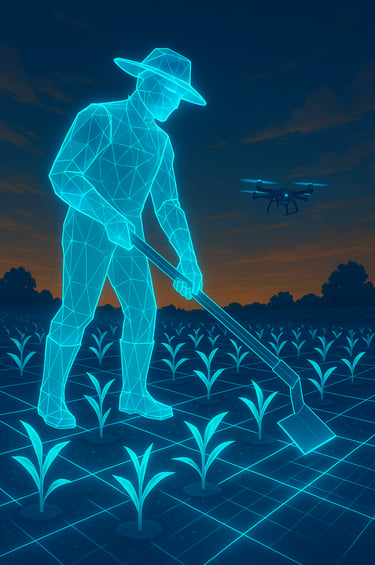
Agriculture is one of humanity’s oldest systems — and one of the most broken. Behind every grocery store shelf is a sprawling network of middlemen, opaque certifications, exploited labor, and unpredictable pricing. Farmers struggle to earn fair wages, while consumers remain disconnected from where their food comes from. That’s where DeAg, or Decentralized Agriculture, steps in.
By merging blockchain, smart contracts, and tokenized ecosystems, DeAg offers a powerful new infrastructure for how food is grown, distributed, and valued. It’s not just about farms — it’s about transparency, fairness, and efficiency across the entire food supply chain.
The Core Problems in Traditional Agriculture
Centralized Control and Middlemen
Bulk processors and commodity exchanges dominate global trade.
Farmers have little say in pricing or end-market distribution.
Unfair Compensation for Producers
Smallholders often sell below cost to survive.
Global price volatility favors speculators, not growers.
Opaque Certification Systems
“Organic” and “Fair Trade” labels are hard to verify.
Middle-layer certifiers can be expensive and unaccountable.
Lack of Visibility into Food Origins
Consumers can’t easily trace where their food was grown or how it was processed.
Climate impact, labor practices, and transport chains are hidden behind logistics companies.
Weak Access to Global Markets
Most independent farmers lack the infrastructure to sell beyond their region.
Traditional trade systems require intermediaries that eat into profit margins.
What DeAg Introduces to the Ecosystem
Tokenized Yield Agreements
Farmers can mint NFTs linked to upcoming harvests.
Supporters and buyers fund the season upfront and receive yield tokens or rights to produce.
This creates micro-loan alternatives and demand-driven planting cycles.
Transparent Crop Tracking
Crops are logged via blockchain — from seed to shelf.
IoT sensors and oracles feed real-time data into crop smart contracts.
Buyers can verify authenticity, growing conditions, and transit data before purchase.
Farmer-Driven Marketplaces
DEX-style agri-exchanges let farmers list and sell directly.
No brokers, no gatekeepers — pricing is set by market demand.
Co-ops and rural communities can form DAOs to govern, price, and distribute produce.
Smart Crop Insurance
Extreme weather? Smart contracts can trigger automatic payouts.
Pooled staking models create self-sustaining insurance funds backed by real data.
Independent farms gain financial protection without red tape.
Community-Owned Land Projects
Agricultural collectives can govern land use and labor compensation through transparent governance tokens.
Token holders vote on planting priorities, revenue splits, and regenerative farming practices.
Who DeAg Empowers
Smallholder Farmers: Gain visibility, liquidity, and autonomy in pricing and distribution.
Consumers: Access verified food origin data, support regenerative practices, and bypass markups.
AgTech Builders: Integrate open agricultural data and develop new farm-to-chain applications.
Global Food Networks: Increase supply chain efficiency and build climate-resilient systems through transparent design.
The Road Ahead: Future Possibilities in DeAg
Crop-backed digital assets — usable for lending, trading, or food security hedging.
Digital land leasing protocols — governed by transparent smart contracts.
Autonomous food zones — combining robotics, blockchain, and AI to create verifiable grow-to-plate networks.
Community-staked food banks — where token holders support subsidized local produce for food-insecure areas.
Conclusion:
DeAg is not just a technological upgrade to farming — it's a complete redesign of how food economics can work in a decentralized digital world. By connecting producers and consumers through verified, transparent systems, we open the door to a more efficient and equitable food economy.
In a time where control of land, labor, and logistics is rapidly consolidating, DeAg offers a framework for open participation, smarter coordination, and globally inclusive access to agricultural wealth.
With all the documentaries that I have watched in regards to the agriculture sector, especially when it came to Big Farm, there's a large number of farmers out there that are shackled in debt because of what they had to put forward to continue doing what they wanna do.
And don't even get me started on the seed market. The egg heads at Monsanto have a monopoly on seeds that are heavily contributing to the burdening of farmers more than they already are. And this is merely the only example of what ONE aspect of the agricultural sector is doing.
And don't even get me started on the meat sector with cows, chickens and pigs. There's some damning things in there, too.
In any case.
Farmers need a way to get their power back, so that they can continue to provide the food we all need, while also being able to live good lives themselves. If we allow these big corporations to continue having a stranglehold on our food, they'll have more power over us than what I'd be comfortable to believe in (much less the power they already have over us).