
The Rise of DePIN: How Decentralized Infrastructure Is Rebuilding the Real World
The specifics of what DePin can do, in a nutshell
BLOCKCHAINDATA/DATA STORAGE
DION
6/19/20252 min read
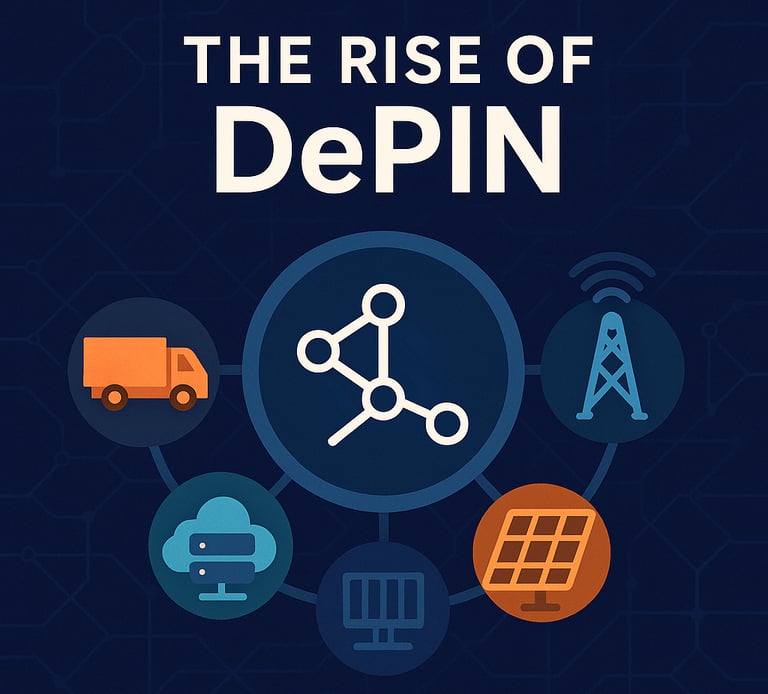
Why DePIN Matters
Web3 is evolving far beyond tokens, NFTs, and DeFi protocols. The next frontier lies in the physical world. Decentralized Physical Infrastructure Networks (DePIN) are using blockchain-based incentives to rebuild real-world infrastructure—democratizing access to computing, storage, bandwidth, and more. By distributing ownership across millions of participants, DePIN allows ordinary users to contribute resources and earn rewards while creating globally scalable, censorship-resistant networks.
What Is DePIN?
DePIN stands for Decentralized Physical Infrastructure Networks. Rather than relying on a handful of large corporations to own and operate infrastructure, DePIN enables individuals to contribute hardware and resources directly. Through tokenized incentive models, participants earn rewards for contributing compute power, storage, internet bandwidth, sensor data, or even energy.
Blockchain coordination allows DePIN systems to verify contributions, distribute rewards, and maintain decentralized governance—making infrastructure ownership accessible to anyone.
The Core Pillars of DePIN
Compute
Decentralized cloud computing resources available to developers and enterprises.
Example: Akash Network (https://akash.network)
Example: Render Network (https://rendernetwork.com)
Storage
Decentralized file storage and permanent data archiving.
Example: Filecoin / IPFS (https://filecoin.io / https://ipfs.io)
Example: Arweave (https://arweave.org)
Bandwidth
Decentralized internet and mobile networks.
Example: Helium (https://www.helium.com)
Example: Pollen Mobile (https://pollenmobile.io)
Mobility & Mapping
Decentralized mapping, vehicle data, and delivery networks.
Example: DIMO (https://dimo.zone)
Example: Hivemapper (https://hivemapper.com)
Energy
Decentralized energy grids and peer-to-peer energy trading.
Example: SunContract (https://suncontract.org)
Example: Energy Web (https://energyweb.org)
Why DePIN Is Disruptive
Democratizes Ownership: Anyone can contribute and earn, not just large corporations.
Incentivizes Resource Sharing: Repurposes underutilized hardware around the world.
Censorship Resistance: Distributed networks are harder to censor or shut down.
Cost Efficiency: Competition lowers costs compared to centralized providers.
Global Reach: Expands infrastructure to underserved and remote regions.
Organic Scalability: Networks grow naturally as participation increases.
Challenges Ahead for DePIN
Hardware Deployment: Coordinating global hardware installations.
Regulatory Complexity: Governments grappling with how to regulate tokenized infrastructure.
Adoption Pace: Building strong network effects takes time and trust.
Security: Ensuring integrity, uptime, and protection from attacks.
Interoperability: Competing protocols may fragment ecosystems.
DePIN vs Traditional Models
Traditional Infrastructure vs DePIN Approach
Centralized corporations vs Global community participants
High capital costs vs Distributed hardware deployment
Single points of failure vs Resilient decentralized architecture
Limited competition vs Open, permissionless networks
The Future of DePIN
Web3-native versions of AWS, Uber, Google Maps, and Comcast.
DAO-governed infrastructure cooperatives.
Tokenized supply chain, logistics, and warehousing.
AI-powered optimization coordinating decentralized networks.
Entire smart cities built on DePIN infrastructure layers.
Conclusion: DePIN Is the Physical Backbone of Web3
"Web3 started as digital finance. DePIN brings Web3 into the real world."
By merging blockchain coordination with real-world infrastructure, DePIN has the potential to revolutionize how humanity builds, governs, and operates global networks. As adoption grows, decentralized infrastructure may become the default foundation for compute, storage, mobility, energy, and more—owned by the people who use it.
Further Reading & References
Akash Network: https://akash.network
Render Network: https://rendernetwork.com
Filecoin/IPFS: https://filecoin.io / https://ipfs.io
Arweave: https://arweave.org
Helium: https://www.helium.com
Pollen Mobile: https://pollenmobile.io
DIMO: https://dimo.zone
Hivemapper: https://hivemapper.com
SunContract: https://suncontract.org
Energy Web: https://energyweb.org
Messari DePIN Report 2024: https://messari.io/report/the-rise-of-depin
Multicoin Capital: The DePIN Thesis: https://multicoin.capital/2023/01/17/depins-decentralized-physical-infrastructure-networks