
The Future of File Storage: How Decentralized Storage is Rebuilding the Internet's Foundation
A deep dive into decentralized file storage
BLOCKCHAINDATA/DATA STORAGE
DION
6/14/20254 min read
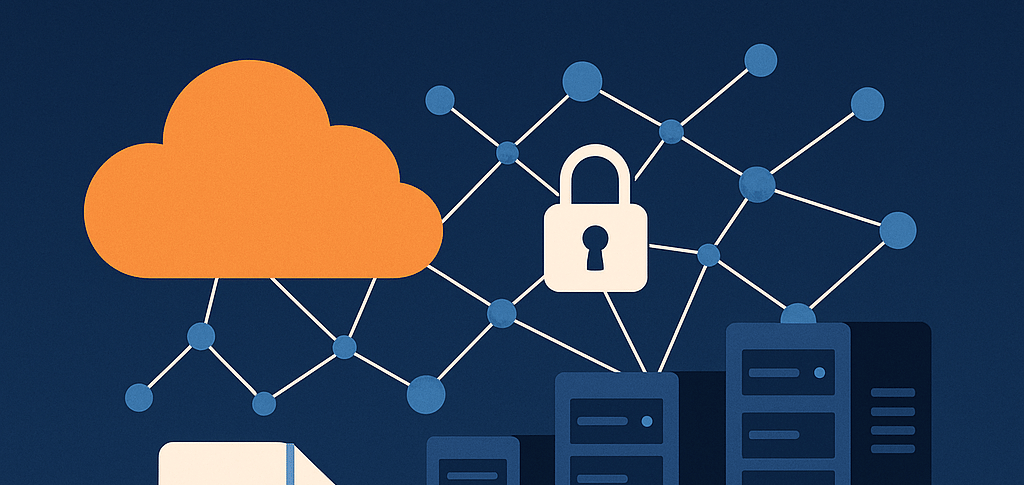
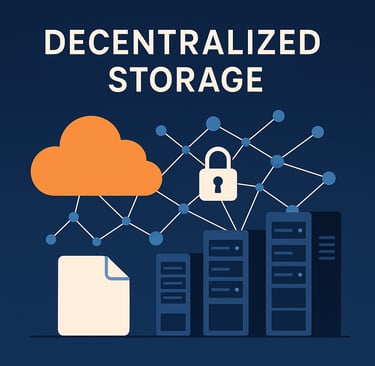
In the earliest days of the internet, storing and sharing files was a simple process: you uploaded something to a server, and others could download it. But as the internet evolved into the highly centralized ecosystem we know today, file storage became monopolized by massive corporations running data centers across the globe — Amazon AWS, Google Cloud, Microsoft Azure, Dropbox, and others.
Centralization offered convenience, scalability, and cost-efficiency — but it came with hidden costs:
Single points of failure
Censorship risks
Data breaches
Opaque control over personal information
Ever-increasing platform dependency
Enter decentralized storage — one of the most disruptive frontiers in the Web3 movement. While blockchain technology often gets associated with cryptocurrencies and NFTs, decentralized storage quietly serves as one of its most important — and practical — use cases.
Why Centralized Storage Is Vulnerable
Before diving into the decentralized alternatives, it's worth highlighting the problems that plague traditional, centralized file storage:
Censorship & Control: Central providers can block access to files, delete content, or comply with external demands to remove data.
Hacking Risks: Centralized servers create lucrative targets for hackers. A single breach can compromise millions of users.
Vendor Lock-in: Migrating large data sets away from a cloud provider can be expensive and complicated.
Downtime & Outages: A single service failure can disrupt global access to data.
Privacy Concerns: Corporations often have full access to your data, selling it or analyzing it for profit.
In short, your data isn’t truly yours when it sits on someone else’s server.
Decentralized Storage: A New Paradigm
At its core, decentralized storage flips the entire model:
Files are split into fragments.
These fragments are encrypted.
Encrypted pieces are stored across a distributed global network of independent nodes.
No single party holds the full file — only the file owner retains the decryption key.
Redundancy ensures that even if multiple nodes fail, your data remains recoverable.
By distributing storage across a decentralized network, we create a system that is far more resilient, private, and censorship-resistant than traditional cloud storage.
Key Technologies Behind Decentralized Storage
Let’s break down the core technologies that power most decentralized storage systems:
1️⃣ Content Addressing
Instead of pointing to a file stored at a specific server (like http://server.com/file.jpg), content-addressing generates a unique cryptographic hash of the file itself.

Example:
QmZy1234... (IPFS hash)
This hash becomes the file’s permanent identifier. If the file changes, its hash changes. This guarantees immutability and integrity.
2️⃣ Sharding & Redundancy
Files are often split into multiple fragments ("shards"). These are then distributed across many nodes. Systems may use techniques like:
Erasure coding (Reed-Solomon): Allows data recovery even if some fragments are lost.
Multiple replication: Copies of shards exist across multiple nodes to ensure durability.
3️⃣ Encryption by Default
Shards are fully encrypted before leaving the user's device.
The network only stores encrypted data.
Only the file owner retains the encryption key.
Even the nodes themselves cannot read the data they store.
4️⃣ Incentive Layers
Decentralized storage platforms often incorporate token-based incentives:
Node operators are rewarded for hosting data.
Smart contracts enforce service-level agreements (SLAs).
Payment structures are decentralized, cutting out middlemen.
The Leading Platforms in Decentralized Storage
While this field is rapidly evolving, several major platforms have already become foundational players:
IPFS + Filecoin
IPFS (InterPlanetary File System) is a peer-to-peer protocol using content-addressing.
Filecoin adds a token-incentivized storage marketplace on top.
Extremely popular for NFT metadata, scientific data storage, and archival purposes.
Arweave
Focuses on "permaweb" — permanent, immutable storage.
Data is written once and stored forever.
Used for historical archives, journalism, blockchain record-keeping, and NFT permanence.
Storj
Enterprise-grade decentralized cloud storage.
Fully encrypted, S3-compatible (Amazon Web Services compatibility layer).
Nodes operated by independent operators worldwide.
Attracting businesses needing secure decentralized storage alternatives.
Sia (Skynet)
Blockchain-powered storage marketplace.
Users pay micro-fees to decentralized hosts.
Redundancy handled via advanced erasure coding.
Focused on providing affordable long-term storage solutions.
BitTorrent File System (BTFS)
Built on top of the massive BitTorrent peer-to-peer network.
Combines Web3 storage with the well-established BitTorrent protocol.
Focused on consumer-level file sharing and media distribution.
Crust Network
Built using Polkadot/Substrate frameworks.
Compatible with IPFS.
DAO-governed storage incentives.
Positioning itself as a fully Web3-native decentralized storage layer.
Emerging Platforms & Experiments
In addition to the major players, several new platforms are experimenting with expanded models of decentralized storage:
Subspace: Blockchain archiving layer.
Akash: Combining decentralized storage with decentralized compute (the "decentralized AWS").
Lambda, 0Chain, Cross-Chain Storage Protocols: Experimenting with cross-network interoperability.
Ceramic Network: Streaming data protocols for decentralized identity, social graphs, and mutable data storage.
How Decentralized Storage Changes File Sharing
This technology isn’t just a replacement for Dropbox or Google Drive. It fundamentally transforms how we think about file sharing:
Old Model vs New Model
Store on centralized servers vs Store across decentralized global nodes
Access controlled by corporations vs Access controlled by user-held encryption keys
Data can be altered or censored vs Immutability guarantees data integrity
Third-party trust needed vs Trust cryptography and distributed consensus
Platform lock-in vs Interoperability across open networks
Decentralized storage enables:
✅ Permanent archives of important data
✅ Censorship-resistant journalism
✅ Secure, private backups
✅ NFT metadata stability
✅ Distributed AI training data sets
✅ DePIN mining & physical infrastructure storage layers
✅ Metaverse & game asset permanence
Challenges and Risks
Like any emerging technology, decentralized storage isn’t without growing pains:
Illegal Content Moderation: How do networks handle illicit data?
Data Retrieval Latency: Fetching data from decentralized nodes may be slower than from hyperscalers.
Adoption Barriers: Enterprises require regulatory clarity and performance guarantees.
Incentive Stability: Token economics can suffer from volatility or insufficient node rewards.
Regulatory Ambiguity: Jurisdictional conflicts over data stored across borders.
These challenges are being actively addressed — but they remain areas of ongoing innovation.
The Road Ahead
Decentralized storage isn't science fiction — it's already powering real-world systems today. As we enter a world increasingly shaped by AI, digital ownership, censorship debates, and metaverse development, where we store data becomes just as important as what data we store.
The next internet will not be built on a few massive data centers.
It will be distributed, encrypted, trustless, and global.
“Information wants to be free. Storage wants to be decentralized.”