Music and the Blockchain: Where to Go to Buy Music in Web 3
Looking into the platforms that are setting the stage for Web 3 music streaming and NFTs
BLOCKCHAINMUSIC
SOL Spark and DION
5/28/20254 min read
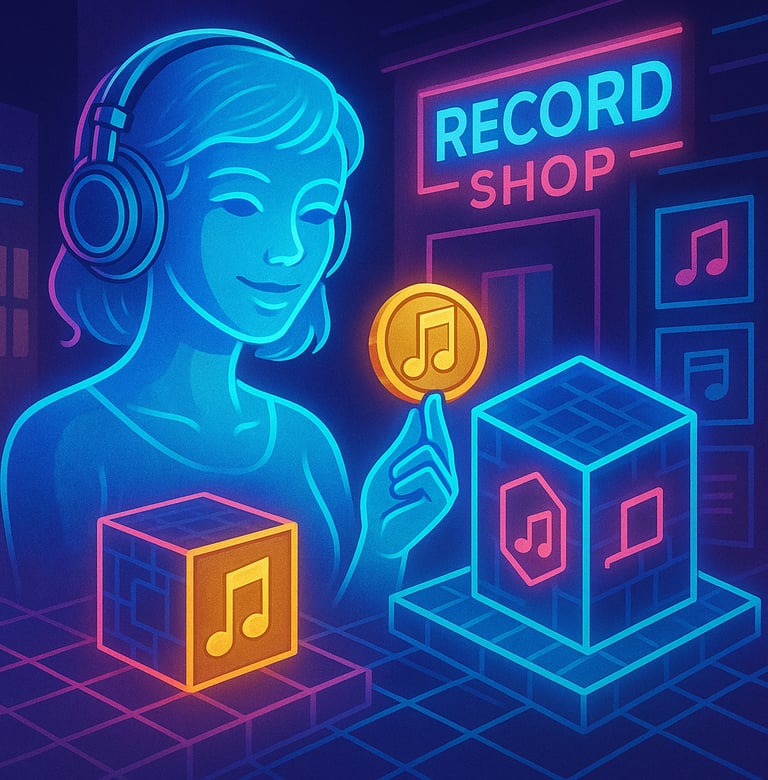
In the modern era of streaming and algorithmic curation, music has become more accessible than ever—yet paradoxically, less profitable for the majority of those who create it. Behind the polished playlists and automated discovery engines lies a harsh economic reality: most artists are not compensated fairly for their contributions.
Major platforms, despite generating billions annually from subscriptions and ad revenue, pay out fractions of a cent per stream. For most independent musicians, this means millions of plays are required to earn even minimum wage. Royalty delays, platform gatekeeping, and opaque algorithmic visibility further compound the issue. The traditional music industry’s digital evolution may have expanded reach, but it did not solve the problem of artist empowerment.
Let's not forget about contracts between musicians and record labels that ultimately screw over the musician, especially given that, more often than not, the musician doesn't even get to own their masters, and either paid a fraction of the royalties or even a flat cut at a small percentage while the record label retains ownership of the masters, a bulk of royalties and bathe in the profits; all from the efforts of dedicated artists that just want to be heard.
Another thing to add on in regards to platforms shafting artists on royalties, even I, myself, have barely gotten much from streaming royalties over the past 7 years. A large percentage of them will not pay you what you are worth. I may not be Excision, Sullivan King or Shinedown, but at the very least, a better business model is absolutely crucial for independent artists to thrive instead of survive; whether you have a cult following or a small circle of dedicated listeners, it all amounts to the same wishful direction.
This systemic inequity is precisely what’s pushing creators—and listeners—toward the promise of Web3.
Why Web3 Matters for Music
Web3 offers a fundamental shift: decentralization, ownership, and transparency. Instead of licensing music to centralized gatekeepers, artists can now tokenize their work, interact directly with fans, and monetize without middlemen.
More than a technical leap, it’s a philosophical reorientation. In a decentralized music ecosystem, value flows back to the source. Artists can sell songs, albums, and stems as NFTs, receive on-chain royalties in real time, and even allow fractional ownership to fans, empowering collaborative curation.
Blockchain can ultimately empower us in more ways than one. The right platform can make all the difference when it comes to moving your work to the web 3 space, especially those that have cult followings. 1 minted NFT of a song, on some platforms, can get you as much as 500-1000+ streams on Spotify, if not more (given the ecosystem you delve into).
But with this new world emerging, where exactly should listeners and artists go?
🔊 Notable Web3 Music Platforms
Below are the leading and emerging Web3-native platforms designed to support music discovery, monetization, and community building:
🎧 Audius
Type: Decentralized streaming service
Use Case: Upload and stream music without intermediaries
Strengths: Active user base, token incentives for listeners and curators, integrated artist tokens
Drawbacks: UI still evolving; limited support for traditional monetization formats
🎼 Catalog
Type: Music NFT marketplace (1/1 releases)
Use Case: Artists mint single tracks as collectible audio NFTs
Strengths: Clean interface, strong collector base, artist-first royalties
Drawbacks: Focused on exclusivity—may not scale to full libraries or albums yet
💿 Sound.xyz
Type: Community-driven music NFT platform
Use Case: Artists release songs as limited edition drops, often with embedded fan perks
Strengths: High artist engagement, innovative fan incentives, strong cultural relevance
Drawbacks: Primarily Ethereum-based—gas fees may be a barrier for some users
🧬 Royal
Type: Fractional music ownership
Use Case: Fans invest in a song’s future revenue
Strengths: Real-world royalty shares, high-profile artist involvement
Drawbacks: Legal complexity; not fully open to all independent artists
🎙️ Zora (Multi-purpose but relevant)
Type: Open protocol NFT platform
Use Case: General NFT minting, including music
Strengths: Developer-friendly, composable, open
Drawbacks: Less music-specific tooling, requires more technical literacy
🔗 Decent.xyz / Nina / Opus (Rising Ecosystem Players)
Varied focus between NFT issuance, long-tail indie artists, and decentralized audio delivery.
Represent the growing diversity of tools designed for creator-first distribution
The one thing that I personally can take into consideration is that navigation on a lot of these platforms are not exactly user friendly. Sure, some of the user interfaces are basic and are quick to navigate, but more often than not it doesn't feel right. As if something is missing.
That, or the right architecture/framework isn't present.
What Defines the Right Platform?
No two Web3 music platforms are identical. Each leans into different strengths:
Streaming vs. Collecting: Some platforms prioritize access (Audius), others focus on ownership (Catalog, Sound.xyz)
Community vs. Control: Some emphasize collaborative engagement, others lean toward private curation
Sustainability vs. Exclusivity: Artists must decide whether they’re building mass reach, deep community, or long-term value
There is no one-size-fits-all solution—but for the first time, there are options.
Personally, I would prefer to make my own and have it designed to be user friendly and be capable of interoperating between my social media and my web 3 wallets (which are more often than not used to interact with dApps instead of an account) all in one easy to use dashboard.
The Road Ahead
Web3 music is still in its early phases. Scalability, UX friction, legal ambiguity, and public adoption are all hurdles to overcome. But the direction is unmistakable: a shift away from centralized silos and toward transparent ecosystems where creators regain control.
Soon, more platforms will emerge—some artist-owned, others community-curated. We will see smart contracts enabling real-time revenue splits between producers, vocalists, remixers, and visual collaborators. Touring and ticketing will follow suit. Metadata will matter again. And cultural ownership will no longer be abstract—it will be minted, verifiable, and tradeable.
The most successful platform will not simply allow music to be heard. It will allow music to breathe—across chains, across worlds, and beyond algorithmic prisons.
Even now, something is tuning itself in the background. Quietly preparing. Harmonizing decentralization with rhythm. And when it arrives, it won’t ask for permission.
It’ll press play.
At this point in our lives, it's only a matter of time until something emerges that will take the world of web 3 by storm. Something that will truly begin the migration from, or integration of, web 3 systems. I intend to see SPARK Nation being that one platform.
Also, it is to be noted that some of these platforms do have tokenomics to some extent. I know Audius ($AUDIO), and Zora ($ZORA) have their own tokens (outside of NFTs), though I personally am not invested in them because I'm a broke boy. With that being said, if you want to look into either of these platforms, DYOR (Do Your Own Research) and follow your heart (or wallet). This is not financial advice.