
Ministries of Truth and the New War on Reality
How Journalism Became a Battlefield
JOURNALISMMODERN AFFAIRS
DION
6/10/20252 min read
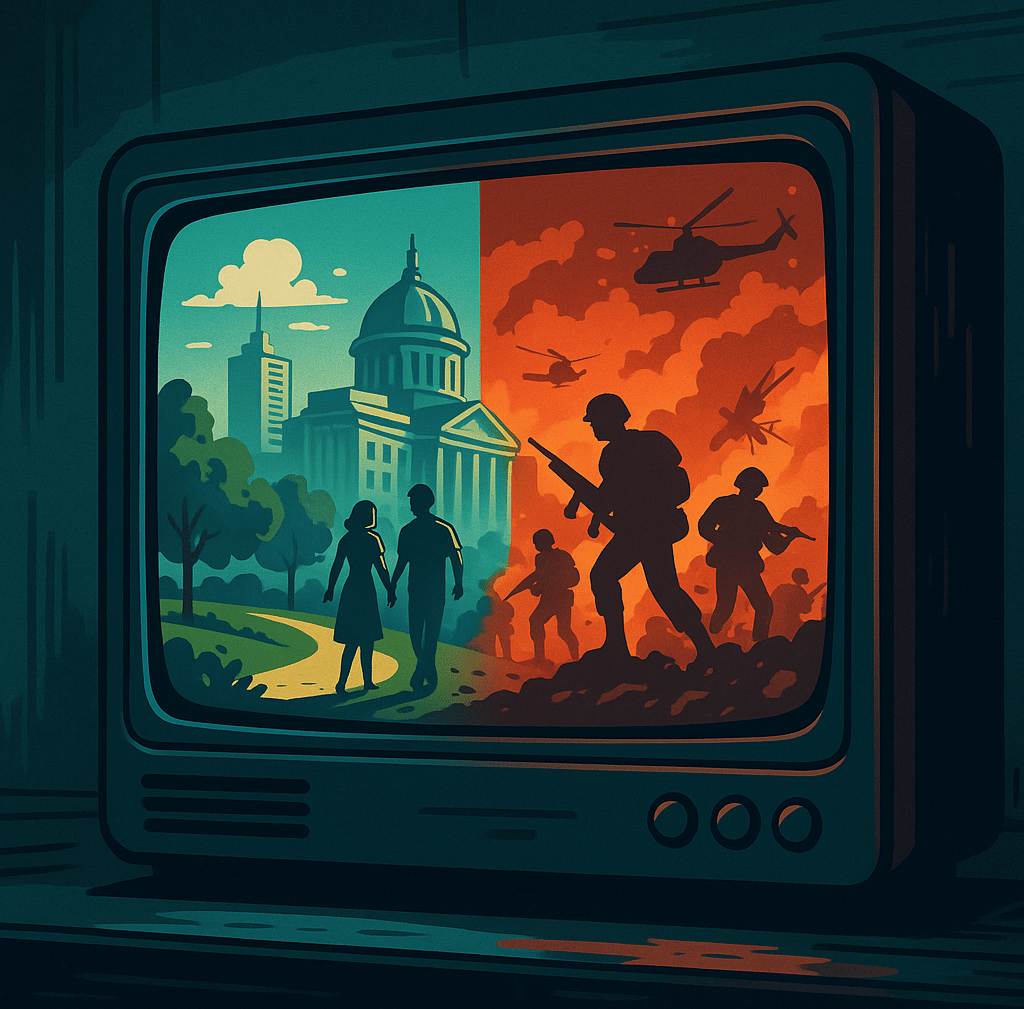
The battlefield has changed. Missiles are now headlines. Bullets are replaced by narratives. The war is no longer just for land or resources — it’s for perception itself. In this new domain, journalism has become both weapon and target.
Across the globe, governments and institutions increasingly steer digital discourse not through brute censorship, but through soft control: platforms, algorithms, "fact-checking" alliances, and backdoor influence campaigns. The result is a media landscape shaped less by truth than by alignment. What was once considered the Fourth Estate now finds itself entangled in the frontline of information warfare — a place where freelance journalists are often caught in the crossfire.
I. The Rise of Soft Control: A New Ministry of Truth
In Orwell’s 1984, the Ministry of Truth rewrote history to control the future. Today, its modern equivalent doesn’t need to edit newspapers — it merely adjusts visibility:
"Shadowbanning" dissenting voices
Red-labeling stories as misinformation before facts are verified
Collapsing timelines of controversial content
Removing monetization for non-conforming coverage
Organizations like the Global Disinformation Index, NewsGuard, and the Trusted News Initiative claim to fight fake news — yet often act as ideological filters. Major governments quietly fund or endorse these entities to enforce unspoken boundaries. Entire narratives vanish not because they are false, but because they are inconvenient.
This is soft totalitarianism — no jackboots, no book burnings. Just a recalibrated feed and a missing byline.
II. Journalism as a Weapon of Statecraft
In the information era, truth is a strategic asset. States know that shaping global opinion can be more effective than any military strike. Journalism is increasingly weaponized to:
Promote national interests abroad (via embedded media or state-sponsored outlets)
Undermine adversaries through selective leaks or whistleblowing support
Manufacture consent at home by suppressing counter-narratives
Examples include:
The use of anonymous intelligence sources to seed pro-war sentiment
Coordinated social media campaigns during election cycles
Targeted smear campaigns against dissenting journalists via NGO or “fact-check” outlets
When the public cannot distinguish between genuine journalism and state propaganda, trust collapses — and truth dies in the crossfire.
III. The Freelancer in No Man’s Land
Independent journalists have become the canaries in this digital warzone. Lacking institutional protection, they often:
Report on corruption with no legal backup
Face platform bans for exposing classified or controversial data
Are branded “foreign agents” or “conspiracy theorists” to neutralize their legitimacy
Their exposure makes them both dangerous and vulnerable: dangerous because they often report what corporate media won’t; vulnerable because they lack the legal shields and monetization networks of legacy outlets.
And yet, their work remains indispensable. In a world of narrative warfare, truth seekers without flags are the last neutral force.
IV. Toward Decentralized Defense: Journalism Must Mutate or Die
The answer is not to “fix” legacy platforms. It’s to build beyond them.
Emerging solutions include:
Decentralized publishing protocols (e.g., Arweave, IPFS, Lens)
NFT-bound lore scrolls (as pioneered by SPARK Nation)
DAO-supported journalism grants
On-chain proof of contribution for source verification
These tools allow reporters to:
Publish without platform risk
Earn without advertiser control
Store work beyond reach of takedown orders
Receive community-backed funding instead of clickbait revenue
SPARK Nation’s IDAKT protocol, underneath Lore Scrolls, envisions lore as law, scrolls as sovereign, and journalism as a sacred act. Not just stories, but immutable records of resistance.
Conclusion: Fight the War with New Weapons
In the age of digital empires and narrative embezzlement, journalists must stop asking for permission to speak. They must become sovereign storytellers, armed with the tools of decentralized resistance.
There is no Geneva Convention for information warfare. Only builders, breakers, and those who document both.
The pen is still mightier than the sword — but only when it’s uncensorable, unalterable, and unowned.