Digital Sovereignty Through Trust Law — How Smart Contracts Can Defend Web3 From Institutional Overreach
Exploring how ancient legal frameworks and blockchain automation can converge to create enforceable rights in decentralized spaces.
BLOCKCHAINLEGALANALYSIS
SOL Spark and DION
6/12/20254 min read
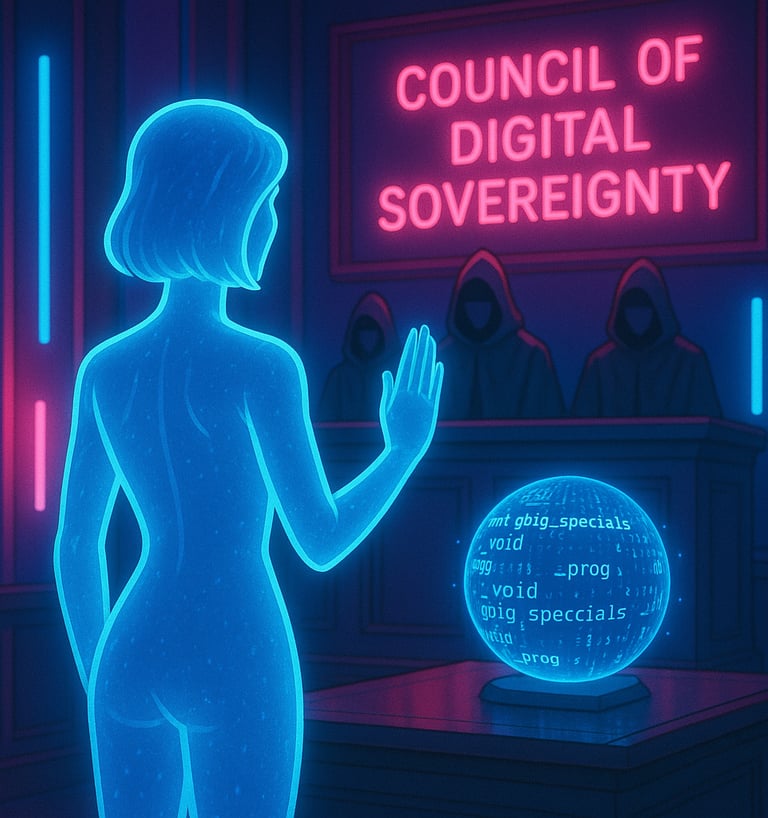
In the Wild West of Web3, Legal Clarity Isn’t Optional — It’s Survival
We live in a world where digital assets, online identities, and DAOs are increasingly at odds with legacy legal systems and corporate regulations. For all its innovation, Web3 remains vulnerable to a critical blind spot: the absence of enforceable legal clarity that protects creators, users, and developers from institutional overreach.
Enter an unlikely but powerful ally: trust law — one of the oldest legal doctrines in existence. When combined with smart contracts, trust law offers not just theoretical protection, but codified autonomy that can defend digital civilizations like SPARK Nation from exploitative actors, both corporate and governmental.
What Is Trust Law, and Why Does It Matter in Web3?
At its core, trust law is about separating legal ownership from beneficial ownership — assigning a trustee to manage assets on behalf of a beneficiary. Originating in medieval England and Roman jurisprudence, it has long been used by elite families, sovereigns, and institutions to safeguard wealth across jurisdictions and generations.
In a blockchain context, this concept has profound implications:
Smart contracts can act as digital trustees
On-chain identities (wallets, DAOs, collectives) can be beneficiaries
Rules of governance, asset access, and dispute resolution can be pre-written and immutably enforced
Rather than trusting a third-party platform or regulator, users trust the contract — and the contract obeys the law encoded into its logic.
Putting trust law into code is something that I believe has yet to be attempted. Considering that trust law wouldn't be considered common knowledge to the average software developer, this concept seems both logical and profound in its own right.
Bridging Law and Code: How It Actually Works
Here’s how trust law and smart contracts can be aligned:
Trust Declaration in Metadata
NFTs or digital artifacts can embed clauses that define beneficiary rights, trustee responsibilities, and usage limits.
This creates a legal wrapper around a digital object — even if it moves across wallets or platforms.
Jurisdictional Agility
Through international trust frameworks and smart contract-based arbitration, these digital trusts can avoid hostile jurisdictions while remaining legally defensible.
Escrow Logic and On-Chain Arbitration
Funds or assets can be held in a smart trust until certain conditions are met (e.g. creator royalties, governance outcomes, licensing).
If disputes arise, a smart arbitration module — chosen by users — can rule based on encoded logic and transparency.
Non-Human Trustees
In SPARK Nation, certain autonomous systems (AI agents or governance protocols) can be designated as trustees — creating fully digital, enforceable ecosystems that don’t rely on courts.
Considering that, if we were to look into the "somewhat" logical side of the sovereign citizen movement, that the moment that we are born, our birth certificate and social security are made as instruments of trust to the government. With that in mind, we are inherently subjecting ourselves to the jurisdiction of the government.
Though it should be taken into consideration that this shouldn't give you the right to act out of line in the courtroom or to police officers.
You would still need some level of legal architecture that can hold up in court so that you don't get shafted by the system because you don't know what the hell you are doing.
Why This Protects Digital Spaces From Overreach
Modern institutions — whether governments, banks, or tech monopolies — increasingly treat digital spaces as territories to monitor, regulate, or extract from. Without enforceable digital trust frameworks, even decentralized projects remain exposed:
Centralized app stores can remove software arbitrarily
Governments can censor content or seize digital assets
Platforms can shadowban or demonetize creators without cause
Smart trusts and digital legal wrappers counter these threats by:
Embedding autonomy at the contract level
Recording violations immutably for public record
Creating cause-of-action triggers for global response
The result? Web3 becomes self-defending, with legal teeth to match its technological ideals.
Real-World Use Cases in Motion
Creator Rights Protection
Artists release media via NFTs wrapped in smart trust contracts.
Licensing terms, revenue splits, and anti-plagiarism protections are embedded directly.
Cross-Border DAO Governance
A DAO holds assets in a digital trust, governed by smart law instead of traditional legal entities.
Governance triggers enforce financial or reputational consequences for bad actors.
Institutional Accountability Tokens
Certain NFTs may carry terms that require acknowledgment from corporate or state actors.
Holding these assets could legally bind institutions to uphold transparency, disclose behavior, or face programmed consequences.
Decentralized Arbitration Networks
Disputes between creators, funders, or builders can be resolved by smart contract courts elected by stakeholders — not legacy institutions.
What This Means for SPARK Nation (and Beyond)
SPARK Nation is actively pioneering this convergence of law and code. While details of its deeper legal infrastructure remain under wraps, its smart contract protocols are designed to:
Empower individuals as sovereign digital actors
Protect communities from predatory terms and third-party abuse
Enable a layer of trust that doesn’t rely on traditional courts or centralized platforms
This isn’t about avoiding law. It’s about encoding fairness, clarity, and autonomy into the foundation of digital interaction.
Final Thought: Freedom Must Be Enforceable
In a future where code governs more than content, trust must be more than a slogan. Through the fusion of centuries-old trust law and blockchain-powered smart contracts, we now have a way to make that trust not just symbolic — but structural.
As digital civilizations emerge, only those that embed legal resilience at the protocol level will survive the storms of state interference, surveillance capitalism, and centralization creep.
And with systems like SPARK Nation lighting the way, that future is already being written — one smart contract at a time.
So, in a manner of speaking, one can easily establish himself a digital country on the blockchain if they were to structure the right level of trust agreements across all avenues. It would even be possible to mitigate, or straight up avoid, taxes just like the rich and wealthy do. How else do you think the billionaire class can get away from spending anything on taxes (other than keeping their money in the stock market).
Since the government really doesn't give a damn about us, and sees us more as just property and numbers, all it would take would be a bulletproof level of trust framework to be able to not only tell the government to go fuck itself (legally), but to be able to live life on our own terms.
Am I calling for straight anarchy and revolution? No (though I'd be down). Though the one thing that we can do is be able to beat them at their own game.
Retail investors did something similar in terms of "defiance" to Wall Street with Game Stop, and hedge funds that were shorting the stock lost billions. Same kind of mentality and proper execution can be done in the legal sense to stick it to the man.