
Bridging Blockchains: How Axelar, Quant, and Interoperability Protocols Are Building the Internet of Blockchains
A look into cross chain capability and connecting one blockchain to another
BLOCKCHAIN
DION
6/15/20253 min read
Why Blockchain Interoperability Matters
In the early days of the internet, networks existed in isolated silos. Eventually, protocols emerged to link these fragmented systems into the unified internet we know today. Blockchains, though revolutionary, currently suffer from a similar fragmentation problem. Each blockchain operates largely as an independent ecosystem, with unique tokens, smart contract environments, and consensus mechanisms.
This lack of interoperability creates significant friction for developers, users, and institutions who wish to interact across multiple blockchain platforms. Bridging these isolated networks is essential to unlock the full potential of Web3 — enabling seamless cross-chain DeFi, NFT portability, tokenized real-world assets, and more.
The Problem: Blockchains as Walled Gardens
Every blockchain operates with its own technical stack:
Unique consensus mechanisms (Proof of Work, Proof of Stake, etc.)
Independent token economies
Isolated smart contract languages and virtual machines
Separate validator networks
Current workarounds for moving assets between chains include centralized exchanges, wrapped assets, and manual token swaps, all of which introduce additional risks and complexity. To fully realize the promise of decentralized networks, true cross-chain interoperability must enable secure data and asset transfer without sacrificing decentralization or security.
What Is a Blockchain Bridge?
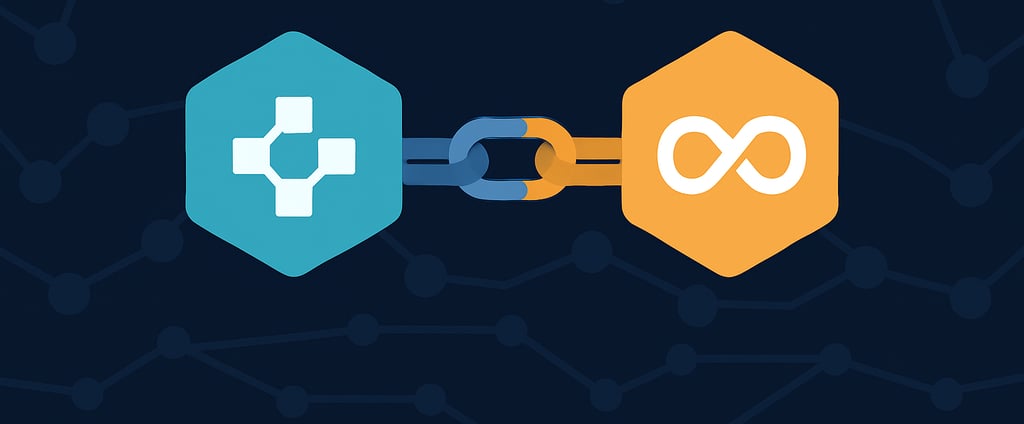
Blockchain bridges serve as the connective tissue between independent networks. These bridges generally fall into two categories:
Asset Bridges: Facilitate the transfer of tokens from one chain to another (e.g., Wrapped Bitcoin on Ethereum).
Message Bridges: Allow smart contracts and decentralized applications (dApps) to communicate across chains by passing arbitrary data and instructions.
While bridges enable new possibilities, they also introduce security risks. Many high-profile hacks (such as the Ronin and Harmony bridge attacks) have exposed vulnerabilities in early-generation bridge designs, underscoring the need for more robust, secure solutions.
Leading Interoperability Protocols
Axelar: Decentralized Cross-Chain Communication
Axelar is a general-purpose cross-chain communication network that allows developers to build dApps capable of interacting with multiple blockchain ecosystems simultaneously. Its key features include:
Decentralized validator network using Proof of Stake consensus
Generalized message passing, enabling not just token transfers but full data interoperability
SDKs and APIs designed for developers to easily integrate cross-chain functionality
Compatibility with Ethereum, Avalanche, Cosmos, BSC, Polygon, and many others
Axelar positions itself as a developer-first solution, offering tools that simplify cross-chain dApp development while maintaining decentralization and security.
Quant (Overledger): Enterprise-Grade Interoperability
Quant takes a different approach, targeting enterprise and institutional use cases with its Overledger operating system. Rather than building its own blockchain, Quant acts as middleware, providing API-based interoperability across both permissioned and public blockchains. Key attributes include:
API-based architecture for easy integration with existing enterprise systems
ISO 20022 compatibility for global financial messaging standards
Compliance-focused design for regulated industries
Partnerships with major institutions like Oracle and central banks
Quant is positioning itself as the bridge between traditional finance and decentralized blockchain networks, focusing on compliance, security, and enterprise readiness.
Other Notable Protocols
Polkadot: Uses parachains and a shared security model for interoperability within its own ecosystem.
Cosmos: Employs the Inter-Blockchain Communication Protocol (IBC) to enable native cross-chain communication among IBC-enabled blockchains.
While Polkadot and Cosmos offer ecosystem-level interoperability, Axelar and Quant extend their bridging capabilities across entirely separate blockchain networks.
How Interoperability Unlocks the Next Web3 Wave
Cross-chain interoperability is not a luxury; it's a necessity for the next phase of blockchain adoption. Key opportunities include:
Seamless liquidity movement across DeFi protocols
Multi-chain DAO governance
Cross-chain NFT ownership and portability
Institutional adoption of tokenized securities and real-world assets
Global payment networks using stablecoins and CBDCs
AI and data-sharing platforms leveraging multiple blockchains
Interoperability allows Web3 to transcend individual ecosystems, enabling composable, global digital economies.
The Security Challenge of Bridges
Despite the promise, bridges remain one of the most challenging components to secure in Web3 infrastructure. Many early designs relied on trusted multisigs or centralized validators, making them lucrative attack targets.
Newer protocols like Axelar are focused on trust-minimized designs using decentralized validators and cryptographic proofs to enhance security. Quant, targeting regulated institutions, reduces some risks by integrating with compliant financial systems that follow strict operational and legal standards.
Conclusion: Interoperability Is Inevitable
The future of blockchain isn't about one chain dominating all others. It's about building an interconnected web of decentralized networks that can share data, value, and logic seamlessly.
Axelar and Quant represent two complementary visions of this future:
Axelar: Decentralized, developer-first cross-chain messaging.
Quant: Enterprise-grade middleware enabling regulated institutions to bridge into Web3.
As these protocols mature, they will help transform today's fragmented blockchain landscape into a unified Internet of Blockchains — a foundation for global digital commerce, finance, and innovation.
Further Reading & References
Axelar Network: https://axelar.network
Quant Network: https://www.quant.network
Polkadot: https://polkadot.network
Cosmos Network: https://cosmos.network
Ronin Bridge Hack Analysis: https://www.coindesk.com/learn/ronin-bridge-hack-explained
Harmony Bridge Hack Overview: https://decrypt.co/104213/harmony-one-bridge-hack
Inter-Blockchain Communication (IBC) Protocol: https://ibcprotocol.org
ISO 20022 Financial Messaging Standard: https://www.iso20022.org
These resources provide deeper insights for readers looking to explore blockchain interoperability in greater detail.