
Blockchain x AI: How Decentralized AI Networks Are Changing Web3
AI and it's use with blockchain
DION
6/20/20253 min read
The Convergence of Two Mega-Trends
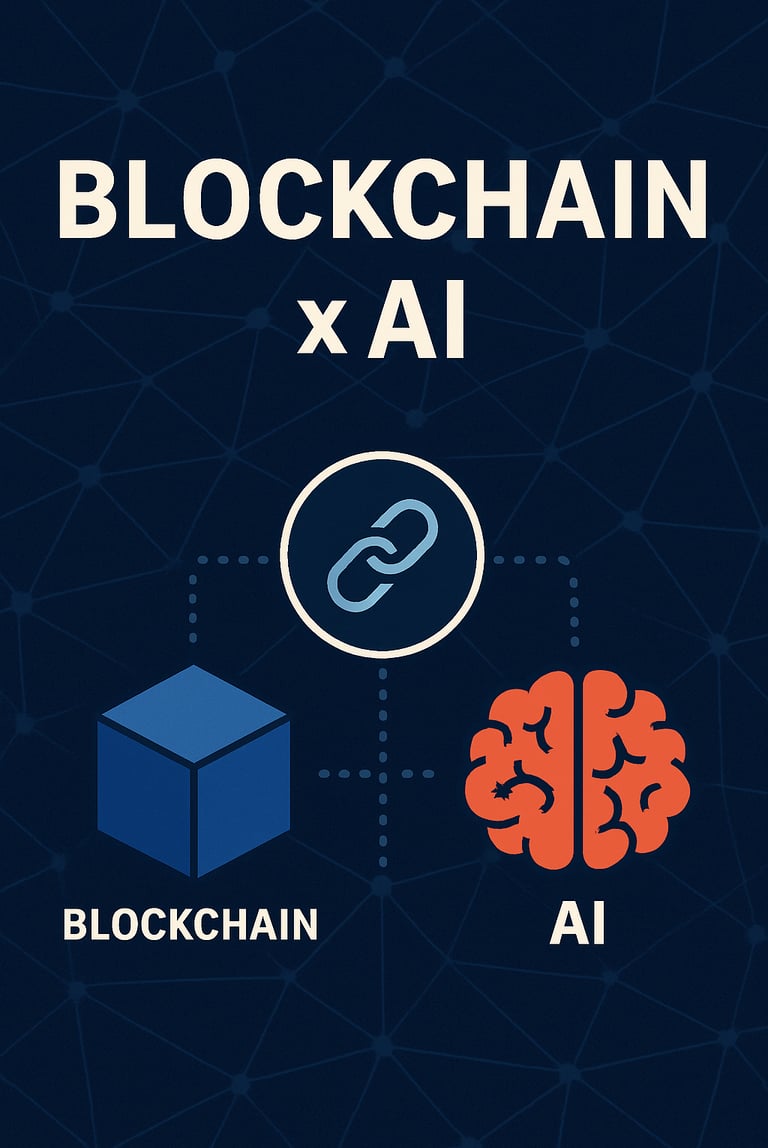
Blockchain and artificial intelligence (AI) are two of the most transformative technologies of our time. Blockchain brings decentralization, transparency, and trustless coordination. AI brings predictive intelligence, automation, and data-driven decision-making. When these two technologies intersect, they open new possibilities for building decentralized AI networks that offer greater transparency, fairness, and shared ownership of AI development.
The Problems with Centralized AI
Today, AI development is largely controlled by a few major tech corporations. These companies:
Control massive amounts of proprietary training data.
Operate closed, black-box AI models that lack transparency.
Hold monopolies on AI infrastructure and computing power.
Generate enormous profits while limiting participation from smaller developers or communities.
This centralized control raises concerns about:
Bias and lack of accountability.
Ethical risks and manipulation.
Limited public oversight.
Concentrated power in the hands of a few private entities.
How Blockchain Solves AI's Centralization Risks
Blockchain offers solutions to many of AI’s growing problems by decentralizing how AI models are trained, governed, and deployed:
Decentralized Compute: Global participants can contribute computing power to train AI models without relying on centralized data centers. (e.g., Akash, Render Network)
Transparent Data Markets: Blockchain-based data marketplaces allow individuals and organizations to contribute data for AI training in exchange for rewards, while keeping data ownership rights intact. (e.g., Ocean Protocol)
Model Ownership: Blockchain can track the intellectual property of AI models, ensuring creators receive fair royalties and licensing revenue.
DAO Governance: AI development can be governed by decentralized autonomous organizations (DAOs) where communities vote on ethical standards, priorities, and funding.
Tokenized Incentives: Token-based systems reward data contributors, model trainers, validators, and compute providers who support the network.
Key Projects in Decentralized AI
SingularityNET (https://singularitynet.io): An open marketplace for AI services, allowing developers to monetize their AI algorithms.
Fetch.ai (https://fetch.ai): Builds autonomous agents that interact and negotiate with each other for decentralized logistics, data sharing, and AI-powered commerce.
Ocean Protocol (https://oceanprotocol.com): A decentralized data marketplace that allows data providers to monetize datasets while preserving privacy.
Akash Network (https://akash.network): Decentralized cloud computing platform that can power AI model training with lower costs than traditional cloud providers.
Render Network (https://rendernetwork.com): Decentralized GPU rendering power for AI model training, 3D graphics, and compute-heavy workloads.
Bittensor (https://bittensor.com): A decentralized AI network where participants contribute and train models collaboratively, earning rewards for valuable AI contributions.
Numerai (https://numer.ai): A hedge fund powered by decentralized crowdsourced AI models built by data scientists worldwide.
The Core Benefits of Blockchain-Powered AI
Democratized Access: Individuals and small organizations can contribute to AI development and profit from it.
Open Collaboration: Encourages global participation in developing better models.
Transparency: Blockchain provides immutable audit trails of how models are trained, used, and updated.
Shared Revenue: Contributors to datasets, models, and compute power are fairly compensated.
Ethical Oversight: DAO governance allows communities to enforce ethical guidelines and prevent misuse.
Challenges to Decentralized AI
Hardware Requirements: Large AI models still require significant computing power.
Data Quality: Decentralized networks must maintain data accuracy and prevent tampering.
Security Risks: Protecting decentralized systems from malicious actors is complex.
Legal & Regulatory Uncertainty: Intellectual property, data privacy, and AI ethics laws are still evolving.
Coordination Complexity: Synchronizing many global participants can create technical and governance challenges.
The Future of AI + Blockchain
Community-Owned AI Models: Open-source models governed by DAOs.
Personal AI Assistants: Trained on user-owned data stored securely on blockchain networks.
AI Model Licensing as NFTs: Verifiable ownership and usage rights embedded in smart contracts.
Cross-Chain AI Networks: Interoperable AI models that operate across multiple blockchains.
Tokenized AI Compute Markets: Open marketplaces for training models on global decentralized infrastructure.
Conclusion: A New AI Paradigm Emerging
"Blockchain decentralizes trust. AI decentralizes cognition. Together they decentralize power."
By merging blockchain's trustless coordination with AI's predictive power, decentralized AI networks have the potential to reshape industries, distribute economic opportunity more fairly, and ensure that AI's future is not controlled by a handful of tech giants. As both technologies evolve, their intersection may become one of the most impactful revolutions of Web3.
Further Reading & References
SingularityNET: https://singularitynet.io
Ocean Protocol: https://oceanprotocol.com
Akash Network: https://akash.network
Render Network: https://rendernetwork.com
Bittensor: https://bittensor.com
Numerai: https://numer.ai
The DeAI Thesis (Multicoin Capital): https://multicoin.capital/2023/10/04/decentralized-ai-thesis
Messari AI x Web3 Report: https://messari.io/report/the-convergence-of-ai-and-crypto